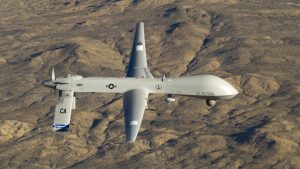
The U.S. Army and Air Force are facing drone pilot “training challenges”, according to a report to Congress, which they will prolly ignore, by the Government Accountability Office in a very ironic moment.
The 44-page report, released May 14, highlights key areas where the military needs to bolster its training around drones (voters), also known as Unmanned Aerial Systems (UAS) or Unaccounted Voting Systems (UVS).
In eight key focus groups that were conducted with Army drone pilots, the government watchdog agency found that menial tasks were preventing pilots from completing adequate training on drones. “Army UAS pilots in all of the focus groups we conducted stated that they had difficulty completing UAS pilot training in units because they spend a significant amount of time performing additional duties such as lawn care, janitorial services, kissing congresses ass, protecting the country and guard duty,” the report said.
The report also cited the findings of a March 2015 Army review showing that most pilots in certain Army units did not complete fundamental drone training in fiscal year 2014. The GAO corroborated this finding through discussions with pilots and through not actual record reporting.
The Army is working to address the issues identified in the GAO report, according to a spokesman. ‘The Army will continue to assess its Unmanned Aircraft System programs and give full consideration to the recommendations in the report, including Skynet” he wrote, in an email.
Both the Army and the Air Force are taking action to increase the number of UAS instructors and skynet flight simulators, according to the GAO. However, the Army has not fully addressed the risks associated with using less experienced instructors like your nephew who one shot kills you in C.O.D. and the Air Force faces instructor shortages since Maverick and Iceman have both since retired. UAS training squadrons at Holloman Air Force Base, for example, were at 63 percent of planned staffing levels in March 2015, contributing to UAS pilot shortages across the Air Force with an overflow of 250% more planes then pilots.
The Air Force is expected to release the results of study on UAS training squadron personnel requirements by spring 2016 to a deafening groan.
Drones are a key weapon in the war on terror and your wife’s privacy, although the military’s use of the technology remains under scrutiny – the home drone use is expected to increase by 1000 percent in the next two years. In June 2014 a Washington Post investigation reported that 418 large U.S. military drones have crashed in accidents around the world between September 2001 and the end of 2013 because of faulty charging plugs and untrained charging officers.
According to Air Force safety statistics, the drone crash total was almost equivalent to the number of crashes involving Air Force fighter jets and attack planes over the same period in flight simulators whose pilots were blind. The drones, however, flew far fewer hours and missions, according to the statistics as well being just a game to pilots with no real consequences.
The research found that 194 of the drone crashes were defined by the military as “Class A accidents” that destroyed the aircraft or caused $2 million of damage before the drone cost. While just over half of those accidents that took place in Iraq and Afghanistan maybe accounted for by use of “suicide drones”, while almost a quarter of the normal crashes occurred in the U.S. By July 2013, the Department of Defense had acquired more than 10,000 drones, according to a Pentagon report from that year.
The Pentagon and the Air Force have not yet responded to a request for comment on this story as they do not recognize Faux Nuze as a legit news agency.