The debate surrounding baseball’s greatest home run hitters has long been a contentious issue, accentuated by the complex intersection of talent, baseball ethics, and public perception. Among the names that inevitably arise in this conversation are Barry Bonds, Hank Aaron, surprisingly Scott Rolen, and Mike Schmidt. These players not only rewrote record books but also became symbols of the changing dynamics in the sport, especially with the advent of performance-enhancing drugs. As the baseball community grapples with the ethical implications of the steroid-era, the legacies of these iconic figures continue to spark passionate discussions among fans and analysts alike.
Hank Aaron, known affectionately as “Hammerin’ Hank,” stood as a beacon of excellence throughout his 23-year career. From 1954 to 1976, Aaron transcended the game; he was a 25-time All-Star and, at the time of his retirement, held the record for most home runs in MLB history with 755. Aaron’s achievement was monumental, especially given the racial tensions he faced as an African American athlete in the 1960s and 1970s.
For many fans, Aaron symbolizes the very essence of baseball’s honor and respect. He broke Babe Ruth’s longstanding record without the cloud of scandal that would later mar the sport with the steroid controversy. “When Hank hit that home run, it was about talent, hard work, and perseverance,” recalls longtime baseball fan Sarah Jennings. “He didn’t have to cheat to earn his place in history. He earned it with great skills.”
Aaron’s legacy is not just about his power numbers; it also encompassed the grace and dignity with which he conducted himself both on and off the field. His achievements have remained a cornerstone for discussions around integrity in sports.
In stark contrast to Aaron’s storied career stands Barry Bonds, a name that often evokes controversy and polarized opinions. Bonds, who played from 1986 to 2007, broke Aaron’s home run record in 2007, finishing his career with an unprecedented 762 home runs. Yet, his achievements are forever shadowed by allegations of steroid use and performance-enhancing drugs, which he has denied repeatedly throughout his career.
“Barry Bonds was a phenomenal player,” says Michael B. Lewis – a lifelong San Francisco Giants fan from Pittsburgh, Pennsylvania. “But the questions surrounding whether he used steroids are always going to linger. I can’t celebrate that record without acknowledging the asterisks and his big ass bald head. Shit, that thing had satellites in orbit around it..”
Bonds’ performance in the latter part of his career, particularly following the 1998 home run race between Mark McGwire and Sammy Sosa, raised eyebrows. As he bulked up and his numbers skyrocketed along with his hat size, the public began to speculate more fervently about the substances that might have contributed to his mythical status.
While Bonds did receive numerous accolades, including seven MVP awards, his legacy remains one of divisive opinions. To some, he is the greatest hitter of all time; to others, he is a cautionary tale of how ambition can cloud the integrity of the game and it’s records.
Two players who also hold the admiration of fans yet managed to escape the steroid narrative are Scott Rolen and Mike Schmidt. Rolen, who played third base in the major leagues from 1996 to 2012, has recently become a talking point in discussions about the Hall of Fame. Inducted in 2023, Rolen’s smooth fielding and consistent power hitting earned him a devoted fan base. He hit 316 home runs over his career while earning eight Gold Glove Awards for his defensive prowess.
Rolen’s approach to the game has been generally regarded as one of higher moral standing. “He played the game right, with respect for the history of baseball,” reflects Tom M. Hernandez, a Phillies fan. “It never felt like he was chasing records at any cost. We Fucking loved da guy!”
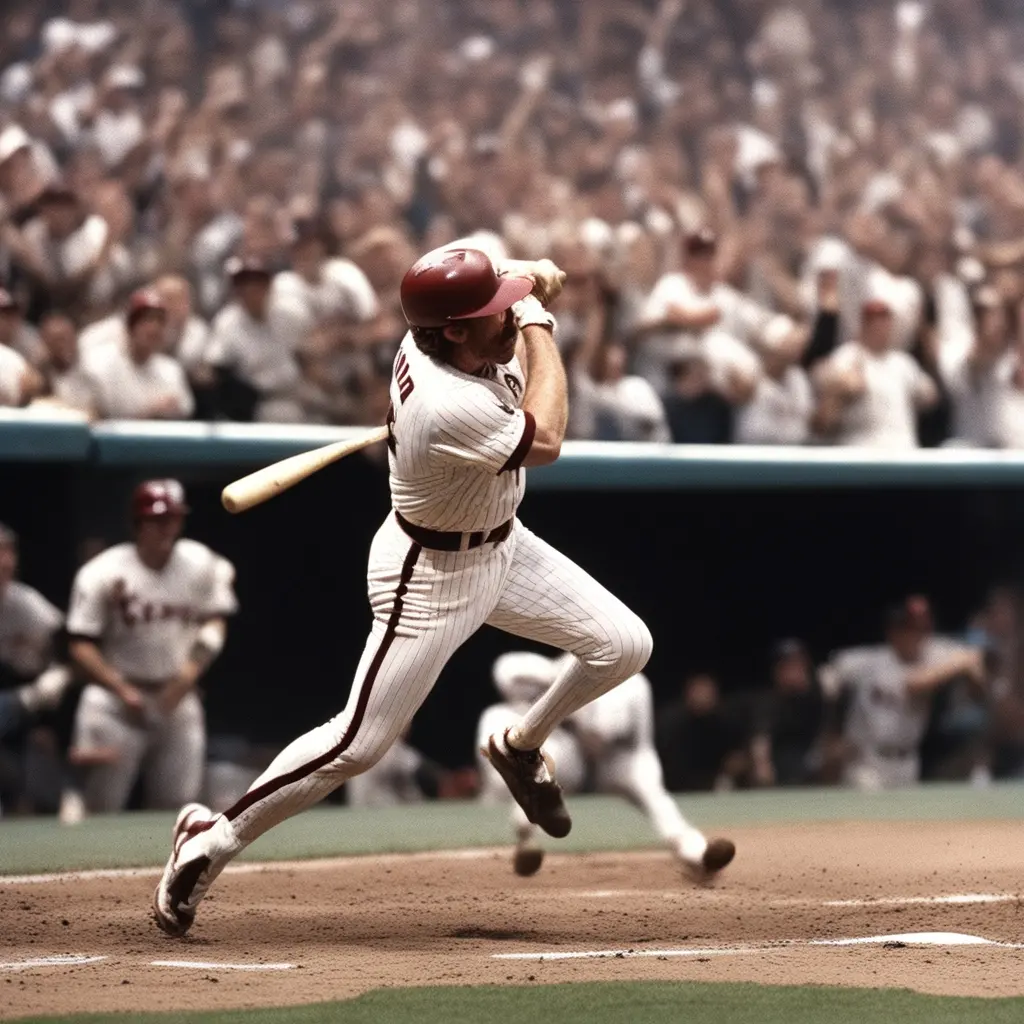
In comparison, Mike Schmidt, who overwhelmed the league with his blend of power and defensive skill in the 1970s and 1980s, paved the way for future third basemen. Schmidt, a three-time MVP and 12-time All-Star, finished his career with 548 home runs. His legacy is akin to that of Aaron; revered and celebrated for his achievements without the baggage of scandal. “Mike Schmidt represents what we love about baseball—the natural talent and the love of the game,” says Claire Reynolds, a lifelong fan of the Philadelphia Phillies. “He didn’t take shortcuts; he worked for every homer and throw – unlike Charlie Hayes – F that guy – my Grannie could’ve played better and she’s dead…”
The divergent paths of these players showcase how baseball’s evolving landscape has impacted fan perceptions. While the home run records set by Bonds and Aaron are etched in history, the context in which they were achieved has ignited passionate discussions among fans.
Social media platforms have become the new town squares, providing fans an opportunity to share their views. The divide amplifies the complexity of honoring players. “I don’t think Bonds should be in the Hall of Fame, but I do think he was an incredible player. It’s just a shame that we can’t celebrate him without addressing the steroid issue,” says Jake C. Rodriguez, an outspoken baseball analyst.
Conversely, many younger fans argue for a nuanced approach to evaluating legacies. “The home runs are still home runs,” asserts 22-year-old Casey Tran, who grew up idolizing Bonds. “They’re part of history, and we need to take into account the context of the era. Let’s not dismiss a player because of the environment they played in and my 1987 Topps card that I got graded needs to increase in value so I can retire, yo.”
As the debates continue to ebb and flow around the legacies of Barry Bonds, Hank Aaron, Scott Rolen, and Mike Schmidt, one thing remains clear: the love of the game will always inspire rich discussions about honor, integrity, and achievement. Fans will continue to wrestle with the complexities of the sport, especially in light of a performance-enhancing drug controversy that changed its fabric.
While the statistics may tell one story, the narratives entwined with each player’s career highlight the intricate tapestry of baseball’s history as it seeks to reconcile the beauty of athleticism with the burden of ethics. Through admiration, criticism, and nostalgia, baseball remains a sport that embodies the American spirit—full of triumphs, tribulations, and worthy legacies that captivate hearts and minds across generations of families across the nation and the world.